Off-Season Training Ideas for the 2025 Rainy Season

Since moving to BC, I’ve had to get used to long stretches of rainy weather. I’ve always liked a lot of diversity in my exercise and training, but it’s easier when I don’t have to worry about an upcoming event where my training has to focus on swimming, biking and running.

Sun Hang Do

The Lightning Kid and I have been practicing this martial art for the past 3 years. It’s a bit of a local phenomenon with clubs throughout BC’s lower mainland and it’s descended from/similar to Tae Kwon Do.

We recently got tested for new belts, and we’re excited to join the ‘Black Belt Club’ where we add grappling and weapons to our training. I honestly could have/should have/would have devoted an entire post to Sun Hang Do, but in the meantime here’s a video of the Lightning Kid’s first belt test, and another of us both testing 2 years later.

A clip from our 2nd most recent Belt Test

Iron Cycle

Iron Cycle is a spin studio in Downtown Abbotsford. My wife and I used to do spin classes at a GoodLife Fitness, but with the advent of Peloton, Soul Cycle and the like, spin classes have stepped up a level. The class is conducted with very low lighting, and the club provides shoes with clips and towels. The song lists are heavily curated and the instructors pump you up with their high energy levels. We come out of the class drenched with sweat, but with a feeling of accomplishment, and it’s a nice ‘date’ that doesn’t revolve around food. Keeping up my bike fitness is a good idea for the next triathlon season and it would pay dividends if I’m on a bike event for the Ski 2 Sea.

We usually do the ‘Capable Ride’, but there are also Yoga classes and a hybrid class that combines spin with stretching and strength work – I hope I can try these sometime too. And yeah, I dig the name.

Body bar

I’ve been interested in these as a piece of strength training equipment for a while now. Between strengthening for kayaking (in case I need to do it for the Ski 2 Sea) or for Bo Staff work in Sun Hang Do (see above), I think it could be a nice addition to my home gym.


Cindy + other Crossfit.

I read somewhere that the ‘Cindy’ Crossfit workout is Tom Holland’s (a.k.a. Spider-Man) favourite workout. It’s 20 minutes of doing As Many Rounds As Possiple (a.k.a. AMRAP) of 5 pull-ups, 10 push-ups and 15 squats. I can’t do unassisted pull-ups so I use a band.

This workout makes me sweat a lot, and I’ve found that I’ve improved on the pull-ups already after doing it sporadically throughout the summer. I sometimes do variant push-ups, or lunges instead of squats .


Project Climbing

Project Climbing is a bouldering gym that has branches in Abbotsford, Chilliwack and Cloverdale. The boys and I have experimented with bouldering from time to time in Mississauga, on our trip to Berkeley, California and at both the Abbotsford and Chilliwack location. Bouldering is a form of rock climbing that is performed on small rock formations or artificial rock walls without the use of ropes or harnesses. Indoors, it’s a pretty low commitment way to get a full body workout that works your stabiliser muscles and co-ordination. I’m hoping I can squeeze in a few visits to this gym and improve my skills, grip strength (a significant marker of longevity) and upper-body strength.

Rucking

I had an old backpack that I filled with old weights and kept it in my car – sometimes when there was time to go for a little walk, I’d throw it on for a bigger calorie burn. Unfortunately, while parked in downtown Vancouver (Gastown to be precise) while the Lightning Kid was rehearsing for Toronto Kids Fashion Week, someone smashed in my car’s back window to take the backpack. I was upset, obviously, but I had to laugh at the idea that the thief probably thought they’d scored a laptop, when it was just relatively worthless weight. I hope they nearly dislocated their shoulder when they snatched it. So I might spring for a high-end ‘official’ pack and use it in the same way – but not keep it in my car when parked in a bad neighbourhood.

Mamba Cycle

This would probably feel like cheating on Iron Cycle (above), but it’s apparently a fitness studio with spinning, strength circuits, and heavy bag work. I guess the latter would potentially make it feel like cheating on Sun Hang Do (also above).

Mountain Biking

I honestly thought I’d be mountain biking more regularly when I moved to B.C. It’s been hard to find trails that are appropriate for my beginner skill level. They’re either on the side of a mountain where one slight bobble would send me careening to my doom, or simple flat gravel trails. At least those are the kinds I find in our neck of the woods; I lose interest if I have to drive more than 20 minutes to find the ‘right’ trail. Furthermore, this activity is one that I’m unlikely to do in lousy weather, so maybe it shouldn’t be on this list – but still I’m hopeful that I can find some subset of trails within the local networks that I could practice and improve my skill on.

Ski 2 Sea

Has anyone heard of the Ski-to-Sea relay race?  It’s a relay from the top of Mount Baker to Bellingham Bay, done in seven different legs: cross-country skiing, downhill skiing, running, road bike, canoe, cyclocross/gravel bike, and sea kayak.  I heard about it (or at least, a now defunct Canadian version) years ago and had it on my bucket list, but I realized last year that now I live close enough to give this a try without having to spring for airfare and shipping equipment.

I’m not in shape to try it the next iteration, so I figured I’d start trying to build a team for **next** year, that is, May of 2026.  A team needs to be from 3 to 8 people (less than 3 is logistically impossible anyway).  The link to the event site is here: https://skitosea.com/

Each leg of the race has some details that one should be clear on – for example, the downhill ski portion has a climb so it would be best for someone with backcountry ski gear for climbing.  Stand-up paddleboards are not allowed on the canoe or sea kayak portion.  No aerobars are allowed on the road bike portion. I’ll examine each leg and rate how plausible it is for me to be a candidate for completing that leg as part of a team.

Leg 1: Cross-Country Skiing (Length: 6km)

Cross-country skiing is one of my favourite sports (check the receipts!). I’ve been doing it since I could walk, and the distance isn’t too onerous. The terrain will probably be tough (intermediate to advanced according to the description) and being the first leg means getting up extra early for various logistical reasons. I just got some new skis this year so I can work on my skating (which is banned during the first 100 yards of the race), so this feels like an area I can shine in.

Plausibility: High

Leg 2: Downhill Ski/Snowboard (Length: 4km)

This sounds like a no-brainer, but unfortunately, there is a portion where you must climb to the top of a hill – over 1000 feet of elevation gain! I thought this required climbing skins and back-country skis, but according to this year’s rules that kind of equipment isn’t allowed. So I guess it’s just a matter of toughing it out in heavy ski boots, and the rest is all downhill, literally.

Plausibility: Medium

Leg 3: Running (Length: 13km)

13 km is beyond my current running endurance, but it is something I could train up to. Mountainous terrain (though it is a road run course) adds extra challenge. The problem is, in a group of 3-8 people which the relay demands, running is one I imagine most people would want to have for themselves.

Plausibility: Medium

Leg 4: Road Bike (Length: 66km)

Seems simple enough for a triathlete, right? It’s even a net downhill! However! Aero-bars are only allowed in the competitive division, so I’d be riding my old road bike might be the better option. There are also no course markers, so having a good familiarity with navigating the course is important. Last year my son and I failed to complete a 50 km bike ride due to some wrong turns on a fundraiser, so that shakes my confidence a little.

Plausibility: Medium

Leg 5: Canoe (Length: 30km)

I know how to canoe, but I don’t have one in BC, and I don’t relish getting strong enough to complete this leg. It is completed in a team of 2, which further complicates training.

Plausibility: Low

Leg 6: Cyclocross (Length: 18km)

I’ve flirted with Cyclocross a little, and always wanted to get a Cross bike. Even if I didn’t, a Mountain bike can be used.

Plausibility: High

Leg 7: Sea Kayak (Length: 8km)

While I don’t have a kayak in BC, I’d be willing to consider getting one and possibly training myself up for this event. Still, getting time on larger bodies of water might be difficult.

Plausibility: Low

The Hidden Event: Logistics

The ideal team has 8 people – one for each event, except canoeing which has 2. This has the simplest implementation, since everyone on the team has one starting line they have to be at (on time), and one event to be competent enough to finish. I think it might take a little of the ‘multi-sport’ fun out of it, though. Any fewer team members (to a minimum of 3) and somebody has to shuttle between events after finishing a leg. The race demands certain road closures, and getting equipment and bodies moved around will take several vehicles (they list 3 vehicles for the 8 racer scenario).

Recruiting and managing an 8-person team has to be challenging too – ensuring everyone is trained, equipped, and informed is a serious bit of management/leadership.

If anyone reading this wants to join a team with me, drop a comment or reach out online. I might start recruiting in local Facebook groups in 2025.

Race Recap: Canaqua Mudskipper Ice Cracker Challenge

Well, the first weekend of May was a busy one. We stayed in downtown Vancouver while my eldest went to a gymnastics competition on the Saturday, then a training camp on the Sunday. The Lightning Kid had an ultrasound at BC Children’s hospital, then on Sunday he auditioned (successfully!) for Vancouver Kids Fashion Week.

My big adventure was probably the Canaqua Sports MudSkipper Swim Run “Ice Cracker” Try It” event.

So, swimruns are events where you swim with shoes on and exit the water and start running immediately, without a transition of any kind. Everything you need for swimming or running must be on your body. I’ve been curious about this for a while, and I got so curious that I bought a pair of Solomon tech amphibians in anticipation of the event, after having tried to do a little swimming with a pair of Vibram Barefoot shoes – that attempt did not seem promising. The purchase was made in a bout of stress-related retail therapy, but sometimes buying something will prompt you into taking the plunge into a new venture so you can retroactively justify the purchase.

Swimrun seemed like a natural fit for me, since it’s an outdoor multisport endurance event, and it even takes out the biking from triathlon, which is probably my least favourite discipline. The Ice Cracker event was the first of the season and promised the coldest water temperatures, but since I play around with cold plunges and cold therapy and I have a killer wetsuit, I was less intimidated by that part.

What I was intimidated by was the technical aspects and the overall distance. Most of the events are described in total distance, so how much of it is swimming and how much is running seemed to be up in the air. The “try-It” event was a great idea for me, because it would give me a taste of it without me putting in too much extra training time to get up to swims more than 1km.

Due to the Vancouver Marathon occurring that same morning, we had some trouble navigating our way out of Vancouver, and when we got to Belcarra Regional Park, we couldn’t find the race site. Luckily, Chris the on-site race director was available and responsive by text, so we found ourselves at the race site with a small number of brave souls, many of whom were there for a pure open-water swim race (no running).

The pre-race briefing made it clear that it would be a 900m swim followed by a 2.6km run around Lake Sassamat for the total of 3.5km. I would rather that swim had been broken into 2 legs of 450m with a run between them because I think that represents the swimrun experience better, especially at higher levels (the other swimrun events were 6.5 and 13km) and also because I wasn’t confident about finishing 900m at a respectable pace.

The longer swimruns went in the first waves, whereas the Try-It athletes started with the open-water swimmers. I have to say, swimming with shoes is like torture. It’s common for swimrun athletes to use a pull-buoy and hand paddles (this is legal) so that their legs are inactive but floating while they get extra pull from the hand paddles. My wetsuit always ensures my lower body is floating, and I didn’t like the idea of the extra strain on my shoulders by using hand paddles for the whole race – I only train with them for 100-200m at a time. You’re also responsible for carrying everything with you on the run, so I didn’t want to do that.

The swim course was triangular with the leg to the first buoy probably being well over half the total distance. Nowhere did I feel slower due to the drag of the shoes than going around the buoys. The open water swimmers had left us way behind, but I thought I was in second of the swimrun athletes doing the Try-It Course. It was a beautiful day, and the water temperature had been reported at 16.5 degrees Celsius. I was worried about my hands getting cold, but I hadn’t thought about my face! I stopped noticing the cold, or got warmed up after 200-300m.

When I reached the swim exit, there were no other swimmers exiting the water, so I gently clambered over the rocks to the trail. One of the volunteers warned me about “swim brain,” and sure enough, I felt a little off-balance on my first few steps. Once that cleared, I was on my way. The Techamphibians did fine on the trail, which was gravel in parts, but in others, a regular hiking trail with roots, rocks, etc. I had tested them out on a short run or two beforehand. Swimming with them counts as breaking the “nothing new on race day rule”, but the upper mesh ensured water drained out so I wasn’t sloshing around as I ran. They felt almost like sandals, but slightly more supportive. I did notice a lack of cushioning when I went over the cement “Float Walk” that spans the southern tip of the lake (people use it to fish off of), but for trail-running, they are reasonably suitable – overall, I’m pretty happy with my purchase.

I had taken off my swim cap and held it in my hand to stay cool, and I unzipped the back of my wetsuit, but I was reluctant to take off the top part for cooling, as that’s not what a swimrun athlete would do if they had another swim leg to look forward to. I think managing your pace to not overheat might be a fundamental part of the sport, at least if you wear a wetsuit. I felt the heat the most when exposed to the sun on the Float Walk. Eventually, I did take off the top part of the suit, not only for cooling, but my arm was itching something awful.

When I had rounded most of the lake and saw a beach, I thought I was done, but it turns out there are two beaches, so I did have to gut it out a little further.

I only got passed once on foot, which was by a bone-dry couple out on a fun/training run, not part of the Swimrun. So at the end I figured I had finished second. Not so, I was second last.

I’m a little unsure if I want to pursue this sport further. I have to get up to longer distances in both swim and run anyway, so maybe it’ll make sense to try a longer one that will expose me to the ins and outs (literally, in and out of the water) of swimrun.

Multi-Sport Mind: Biathlon

With the Sochi Winter Olympic Games right around the corner, I thought it might be fun to learn about an often overlooked winter multi-sport event: the Biathlon.


The word biathlon is of Greek origin and means “two tests”.  In this case, the two tests are skiing and shooting.  The sport has its roots in snow-covered Scandinavia where an important survival skill was the ability to hunt on skis with a rifle slung over the shoulder.


A form of biathlon appeared at the first Olympic Winter Games in 1924 as a team event called the military ski patrol.  The military ski patrol would also be a demonstration event at St. Moritz 1928, Garmisch-Partenkirchen 1936 and St. Moritz 1948, the same year the rules for biathlon were standardized.  Biathlon would make its official Olympic debut at the 1960 Winter Games in Squaw Valley.  Women would compete in Olympic biathlon for the first time at Albertville 1992.  There are now five events each for men and women as well as a mixed relay which will make its debut at Sochi 2014.
The sport makes unique demands on biathletes’ bodies.  After skiing fast and hard in cross-country free technique, biathletes must calm themselves to take accurate and controlled shots at targets 50 metres away.  The target size depends on whether the athlete is in the prone or standing position.  In the prone position, the hit area is 45 mm while in the standing position the hit area is 115 mm.  (source)


I find that last part interesting, because cross-country skiing is an endurance sport (and a tough one at that), the other half of the sport demands an entirely different skill set.  Mental focus, hard-eye coordination and such are really hard to achieve when your heart is pounding its way out of your chest (I used to have a video game in the early PC days called Winter Games; in the biathlon the targeting sight used to bounce up and down faster depending on how hard you had skied).  Missing targets incurs time penalties, so you can undo the hard work done by fast skiing.
I’I’ve noticed that there isn’t much cross-country skiing going on in Southern Ontario due to lack of consistent snow, so adding the complication and expenses of firearms and the safety protocols doesn’t make the sport very accessible to local youth, though having seen youth in training at Highlands Nordic in Duntroon makes me hope that things are different in Central and Northern Ontario.
I’m not a youth, but the responsibility of storing a firearm safely still makes my interest in biathlon purely academic (but if I did want to get certified, I’d go to Guide To Game).  It got me thinking, what if you substituted a bow (and arrows) for a rifle?  I’d feel a little safer about that… I think the potential for accidents with a bow is probably a lot less.  Well somebody already came up with Bowathlon it turns out… only they’ve subbed cross-country running for skiing.  The other problem is that the site hasn’t been updated in over 10 years, but I still like knowing there are other people pursuing the Multi-sport Mind out there…

Have tried Biathlon? Would you? What about Bowathlon? Any other crazy combinations you could come up with?

Mothers’ Day

There’s two important mothers who have helped make me the man I am today, and if part of who I am is a triathlete, then they’re a big part of that too. Let’s do this in chronological order…

My mother was born in immediate post-war Germany, so she started off tough, as you can imagine. I know one story where her mother took her three daughters (my mother being the youngest) to pick potatoes from a field just so they’d have something to eat. My mother ended up with shoes full of blood – she couldn’t have been more than 3 or 4 years old. She grew up without a father thanks to the war, and my grandmother, my aunts and her had to move around a fair bit. Still, somehow they muddled through.

Athletically her side of the family has been very tennis-centric. It’s amazing to watch my mom play tennis (especially since she wins a lot) – no hard or fancy shots, she just hustles for the ball, and returns it consistently, grinding her opponents down. I haven’t stepped on a court in years, nor seen her play recently, but I bet it’s still the same. Growing up, we didn’t just have tennis though. I can remember being in Scouts (everything from Cubs to Venturers), piano lessons, soccer, judo, diving, softball… the list goes on and on. On weekends we’d bike as a family or cross-country ski or hike at the cottage. We were a multi-disciplinarian, multi-sport family, so now, I’m a multi-disciplinarian, multi-sport man.
When I met my wife, I was immediately impressed by how many pies she had her fingers in (figuratively speaking, you understand).  She was working full-time in a marketing executive position, volunteering with a Young Executives of Canada subcommittee of the German-Canadian Chamber of Commerce, teaching special needs kids to ski, all while maintaining an active social life and close ties to her family.  She even seemed game to take on training for a half-marathon with me, so that’s what we did.

Getting to know someone as a friend and better through running (or another form of training, I suppose) till the point where you’re starting to fall in love with them is something I’d wish for anyone who tries to lead a physically active lifestyle.  Running, exercise and physical challenges have always been part of our relationship, and now they’re part of our family life too.  Bringing triathlon into any relationship takes the support of your partner and it can mean outright sacrifice too; so I’m lucky to not only have her in my life to do all those little things that make swimming, biking and running possible, but also that she enjoys similar pursuits and I get the chance to return the favour sometimes.  For the second year in a row, I will be taking care of our sons on Mother’s Day while she runs the Sporting Life 10K… and we’ll be all waiting for her at the finish line (this year I even did the race kit pickup!).

The Human Totem Pole from last year

 Happy Mother’s Day (or Mothers’ Day… there could be more than 1 mother in your life!) How have the Mothers in your life shape your healthy lifestyle?

Felicitous Friday: Week in Review

Another week has gone by with enough interesting developments to merit a recap post!


  • On Tuesday I did a new record for longest swim workout using the ‘Ladder’ workout from Meals And Miles’ Swim Workouts Compilation.  That was before breakfast, and I made it to a Gravity Machine class for lunch.  If I had one more workout/form of exercise, I could have called it another Trifecta Tuesday, but since I didn’t, we’ll call it a #FAIL 😉
  • Those two workouts made me a little sore for Wednesday, but it was some of the nicest weather we’d had all year, so wild horses weren’t going to keep me from doing a Burbathlon! I wasn’t too intense on upper body strength exercises, but I did fit in lunges with a park swing, box jumps on a bench, push-ups, step-ups on a stump, balance beam on a few logs, as well as jumping and (simple-)vaulting some logs and a baseball diamond fence.

    It starts with a hill and a path into the woods….
    The Big Hill to Climb
    Dips in the trail…


    This pic was taken in a colder season… but you can see the lunge with a swing.

  • That all left me too sore on Thursday to do my planned workouts, so recovery it was… especially since I neglected to wear compression or foam-roll the night before.
  • Friday is a day of excitement.  I tried out a bike workout hack that I’ve had rolling around in my head for a while, but you’ll have to wait to see it..  The rest of the weekend is jam-packed with activities and get togethers including initial planning this year’s Levac Attack and a Fitfluential Tweet-Up (or whatever we call get-togethers of online friends) to welcome Pavement Runner to Toronto, where he’ll be doing the Goodlife Toronto Marathon.


How was your week? Is your weekend full of fitness and excitement?

Multi-sport Mind: Rowga

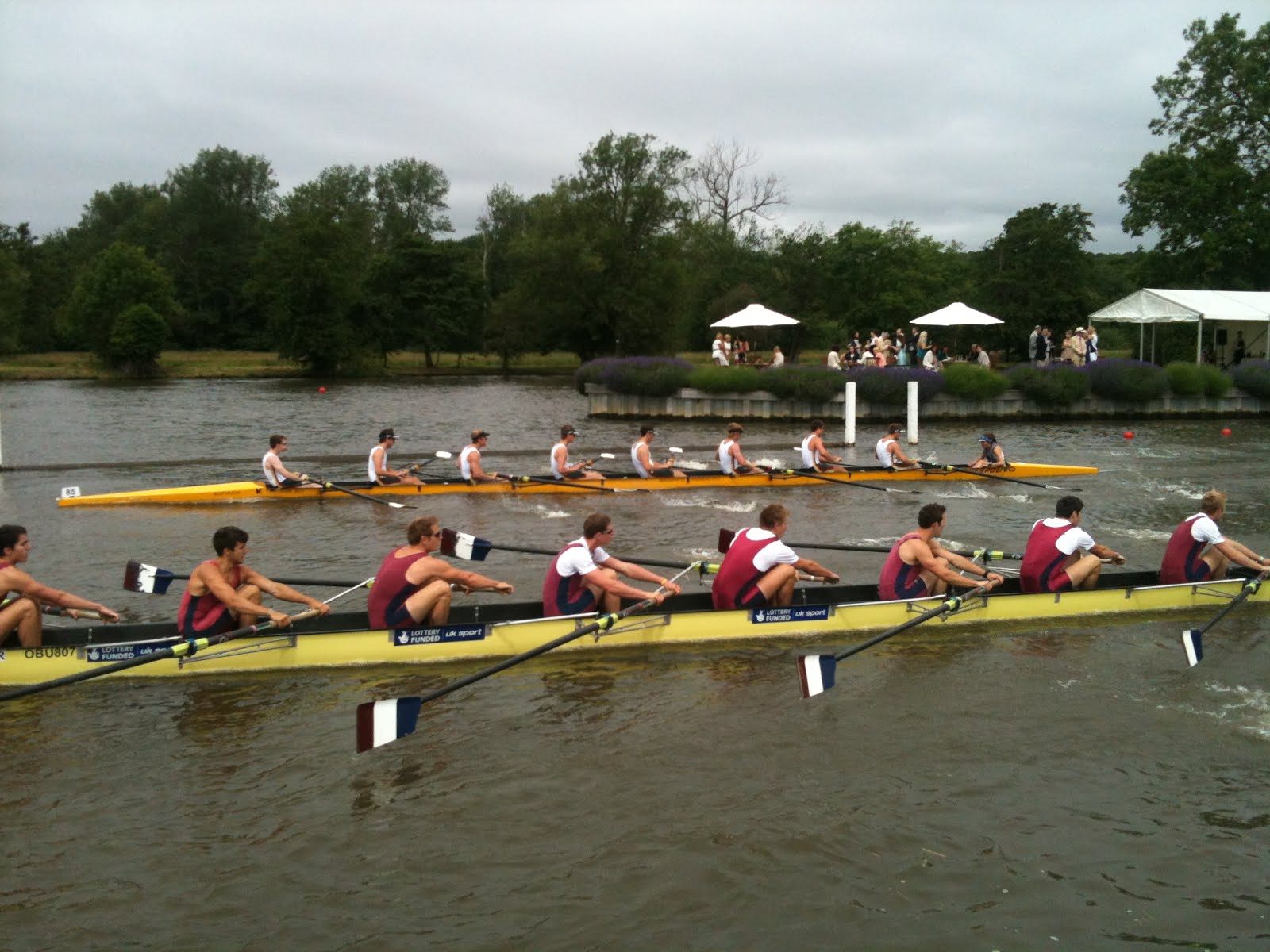
I come from rowing stock, you could say.  My mother rowed, my father rowed – in fact, it’s how they met.  It was a long time before I would get a chance to try it; my high school didn’t have a team, and my high school life put me off trying out for sports enough that combined with the busy schedule of an undergraduate engineering student, I didn’t look into it at the University of Waterloo either.


It took until Grad School in 1999-2000 for me to get in touch with this part of my athletic heritage; I mean, where better than England to get into that scene?  It was unusual for Grad students to take part in athletic clubs, and stranger still to be the eldest on the Novice Men’s Team (I was 26 amongst 19 and 20 year-olds).  The Leeds teams didn’t do well that year, but we still had lots of fun and I learned a lot.  Sadly, digital cameras weren’t that common (at least I didn’t have one), so I’m having trouble tracking down any photographic evidence of these adventures.


We have a rowing shell at our cottage that I hardly use.  The problem with rowing solo (or ‘sculling’) is that it takes an even higher level of skill to keep the boat level and moving in a straight line.  If both oars don’t enter and leave the water at the same time and aren’t inserted to the same depth, the boat reels and curves to the left or right, making it somewhat frustrating.  I can’t follow the shoreline easily, nor can I simply head out to the middle of the lake, because it tends to be wavier and more choppy out there.

Rowing as part of a crew is different.  All rowers are trying to move in sync, taking their cues from the ‘Stroke’ – the rower at the stern of the boat.  Yes, there is a cox (a typically smaller person at the stern who faces forward) who can call out real-time tactics and the rhythm, but your natural responses are a little better simply watching the rower in front of you; provided there isn’t too much delay from one rower to the next, everybody should be in lockstep with the Stroke, who’s in the best position to do what the Cox says.


So rowing has a teamwork aspect and a very technical aspect.  An oar can get caught awkwardly in the water (either on the way in, or more often in my experience, on the way out) and it’s called ‘catching a crab’.  So your technique is something that can always be refined, in addition to simply having plenty of strength and endurance to pull that oar hard, over and over.  The element I like the best, though, is the simple rhythmic exchange between the pull and glide (where you recover for the next stroke).  It reminds me a lot of cross-country skiing, or maybe even inline skating.


I think I wrote all that out of nostalgia, since rowing doesn’t play a very big role in my current fitness regime with one exception: when I attend a Yoga class (as I have been once a week for the past 3-4 weeks), I don’t like to do it without having warm muscles.  So I often hit the ergometer/rowing machine for 5-10 minutes before a class.  It works out the whole body, but especially the back muscles, which are not only often neglected by other forms of functional exercise, but they get a nice stretch through so many Yoga poses and sequences.  Using the machine (side note: a friend of mine who got himself in good enough shape to pass police entrance exams credits most of his transformation to a rowing machine!) lets me train my muscle memory so I don’t completely forget the gross motor parts of a rowing stroke, puts me in touch with my past a little, and the rhythm of the stroke can be meditative (though I usually have to concentrate to tune out the gym’s distractions like music, TV and other people).  


In other words, it can be a great mental and physical complement to a Yoga class, thus: Row-ga.  Of course, there’s also this guy, who heads out in a boat in the ocean to have deep, meditative thoughts.  That’s also good (though he seems to have retired that blog, most of the links seem to be dead). Plus these guys think like me.

Have you used an ergometer/rowing machine?  How about the real deal?  

Live Long and Rock On!

Trifecta Tuesdays!

I like Tuesdays.  They’re not Monday, so they don’t have that back-to-work sting, and yet you’re not far enough into the week to realize how far behind you might be at work.  Due to our circumstances vis-a-vis daycare and babysitting help from visitors, it’s a good chance for me to get out of the house early for some extra exercise…

And thus Trifecta Tuesday was born.


My basic premise for Trifecta Tuesday is to get 3 different forms of exercise done in one day.  I’m a triathlete… I like threes… three is a magic number after all!

Some examples so far:

  1. Dec 4th.  I hit the pool in the morning for a workout, then at lunch I had the two-fer workout that I have dubbed ‘Rowga’.  Swimming, Rowing Machine, Yoga.
  2. Dec 11th.  Another morning Swim.  Then the 3-2-1 workout: 3 cardio sessions, 2 whole-body strength circuits, 1 session of ab/core work; 10 minutes each for a (theoretical 60 minute workout).  I ended up short on time and skipping the explicit core work, but since I used the Spartacus circuit and the Matrix circuit for strength, my core was adequately addressed.  The cardio sessions were Rowing (again), Spinning, and a combination of skipping rope and the heavy bag.  I lost count somewhere in there, but it’s more than 3!
  3. Dec 18th.  Hey! That’s today!  I’m swamped with year-end stuff at work, so getting 3 activities in would take not only creativity, but… creativity in the interpretation.  I wanted to try a new elliptical trainer that has lateral motion (spoiler alert: upcoming post!) for warm-up, and use the treadmill for a post-workout cardio burn, but others like to use that elliptical/cross-trainer, so I opted for a rowing warm-up.  My weight/strength session had the upper body push (chest), legs, upper body pull (back) structure, but I focused more on tradtional moves with heavier weights like a barbell bench press.  I ended up snagging the lateral ellipitical/cross-trainer for my post-workout cardio burn.

Stay tuned every tuesday for tweets with the hashtag #TrifectaTuesday.  You do follow me on twitter, don’t you?  See if you can get your own 3 activities for your own Trifecta Tuesday!

Bunch of Links

Some Good Reads for Your Web-surfing (do we still call it that?) pleasure:

Over at Healthy Tipping Point, Caitlin witnessed a (Modern) Pentathlon and did a nice little write-up of this multi-sport anomaly.

This season has been lousy for snow and skiing, but still I enjoy reading about it from time to time.  Here’s an article about the Birkebeiner cross-country ski race in Wisconsin from Outside Magazine.  They even go over how you can prepare for the race (training, nutrition and general skiing guidelines).

I now realize I’m sourcing two articles from Outside (from the same author even!).  Here they talk about the benefits of triathlon to health and fitness in general, and why this is a great time for the sport.